
Earlier this year, I attended discussions focused on the future of ports, a topic that naturally centers on innovation, automation, infrastructure modernization, cybersecurity, and emerging technologies. Following that event, I wrote about what I believed was a missing component in many conversations surrounding the future of our nation’s ports: the human element.
The discussions I attended repeatedly returned to technology, systems, and infrastructure. Those investments are both important and necessary, as they will undoubtedly shape the maritime environment for decades to come. Yet throughout those discussions, I found myself returning to the same questions: Who will operate it? Who will maintain it? Who will make decisions when systems fail, conditions change, or the unexpected occurs?
Ports are becoming smarter, more connected, and increasingly automated, but they remain fundamentally human systems. That belief is not new. In many ways, it has been a recurring theme throughout my career and continues to influence how I think about maritime readiness, operational capability, and resilience.
More recently, while observing training evolutions at a local port, I was reminded of why that perspective matters…not because it introduced a new idea, but because it reinforced an existing one.

Watching maritime professionals train, communicate, solve problems, and refine critical operational skills served as a powerful reminder that behind every vessel movement, every security system, every piece of infrastructure, and every technological advancement stands a human who is responsible for making the system work.
As we continue to invest in the future of our ports, we should be careful not to overlook the one capability that has always been at the center of maritime operations: people.
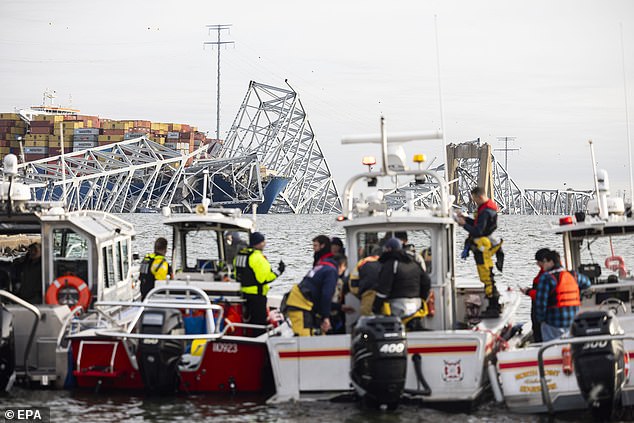
Perhaps no recent event illustrates this reality more clearly than the collapse of the Francis Scott Key Bridge in Baltimore.
In a matter of seconds, a major transportation artery was lost, lives were tragically taken, and one of the nation’s most strategically significant ports faced an unprecedented operational challenge. The physical damage was immediately apparent, but less visible to most observers was the extraordinary effort that followed.

Within hours, a complex network of public and private stakeholders began working toward a common objective: restoring access, supporting recovery efforts, and sustaining commerce. Pilots evaluated navigation concerns. Tug operators adapted to evolving operational requirements. Salvage experts assessed options for clearing the channel. Coast Guard personnel coordinated response activities. Engineers analyzed structural impacts. Emergency managers synchronized resources. Terminal operators worked to minimize disruption while planning for an uncertain future.
The challenge extended far beyond the technical aspects of recovery. It was organizational and it required leaders capable of making decisions with incomplete information, organizations capable of adapting to changing conditions, and professionals who understood not just their individual responsibilities but how those responsibilities contributed to the larger mission.
No technology platform could have independently solved that problem. No automated system could have coordinated the countless operational decisions required to assess hazards, establish priorities, manage risk, and execute a recovery effort of that magnitude.
The response depended upon expertise, relationships, and most importantly, it depended upon people.

The maritime industry has spent decades investing in physical resilience. We harden infrastructure against storms, improve security systems, modernize facilities, and develop increasingly sophisticated technologies to support port operations.
These efforts are necessary, but they also represent only part of the resilience equation.
In many respects, we have become exceptionally good at measuring physical resilience. We can assess infrastructure condition, channel depth, berth capacity, equipment availability, vessel movements, and cargo throughput. Human resilience, however, is far more difficult to quantify, yet it is often the deciding factor when operations are disrupted.
A port may possess world-class infrastructure, but infrastructure alone does not create readiness. A facility may have advanced technology, but technology alone does not guarantee resilience. Equipment, facilities, and systems are only as effective as the people responsible for operating, maintaining, and adapting them when circumstances change.
True resilience exists when organizations possess the human capability to continue functioning despite uncertainty, disruption, and adversity. That capability is built through training, strengthened through experience, reinforced through exercises, and sustained through leadership.
This reality is particularly important because ports represent some of the most complex operational environments in the nation. Their success depends upon a complex network of public and private stakeholders whose responsibilities intersect every day. Port authorities, terminal operators, vessel operators, emergency responders, federal agencies, state partners, local governments, and private industry all contribute to the movement of commerce and the protection of critical infrastructure. Their missions may differ, but their success is interconnected.
This interconnectedness highlights another often overlooked aspect of resilience: relationships.
Ports are often defined by physical assets. We measure channels, terminals, cranes, facilities, vessels, and cargo volumes.

Yet some of the most important infrastructure within a port cannot be found on a chart or within a capital improvement plan…it exists in the relationships that connect organizations, operators, and stakeholders across the maritime environment.
Consider the relationship between a harbor pilot and a Coast Guard watchstander, the relationship between a terminal operator and a local fire department, or the relationship between a port authority, emergency management office, law enforcement agency, and maritime operators. These connections are developed over years through meetings, exercises, training events, working groups, and shared operational experiences.
While these relationships often go unnoticed during routine operations, they become indispensable during a crisis.
When timelines compress, uncertainty increases, and consequences become significant, organizations do not suddenly develop trust. They rely upon relationships that already exist…the established communication pathways, shared understanding, and confidence in the capabilities of their partners.
In many ways, these relationships represent a form of infrastructure that is every bit as important as physical assets. A port can recover from damaged facilities. Recovering from a lack of coordination, trust, or operational competence is significantly more difficult.
This reality is becoming increasingly important as ports face a growing range of challenges. Cyber incidents, severe weather events, supply chain disruptions, infrastructure failures, security threats, and workforce shortages all have the potential to impact operations. While each threat presents unique challenges, the common denominator remains the same: success depends upon the people responsible for managing the response.

The ability to rapidly restore port operations is not developed during an emergency. It is built long before the incident occurs through training, exercises, qualification programs, leadership development, and sustained collaboration among organizations. Time and again, events across the maritime domain continue to reinforce a principle that remains as relevant today as ever…operational readiness is not created during a crisis, it is revealed during one.
As policymakers, industry leaders, and maritime professionals continue to invest in the ports of the future, we should broaden our definition of resilience. Modern facilities, advanced technology, and infrastructure investments all play a critical role in the future of our ports; however, equal emphasis must be placed on developing the workforce that keeps those systems functioning when conditions deteriorate.
Investments in training, operational readiness, incident management capability, workforce development, and cross-sector collaboration are not secondary considerations. They are resilience investments every bit as important as concrete, steel, and technology.
The ports of the future will undoubtedly be smarter, faster, and more connected than ever before. Their ability to withstand disruption and recover from adversity, however, will continue to depend upon a resource that has always been at the center of maritime operations.
Ultimately, the most critical infrastructure within any port is not the facilities, equipment, systems, or technology that enable operations, but the people who sustain those capabilities and keep them functioning when conditions change and challenges emerge.
Leave a Reply