
Over the coming months, federal, state, local, tribal, territorial, and private-sector partners will be carrying out one of the most complex domestic security efforts in modern history. The convergence of the 2026 FIFA World Cup games and the nation’s America 250 celebrations will bring millions of visitors, thousands of public events, and unprecedented demands on public safety, transportation, and critical infrastructure protection across the country.
Much of the public discussion surrounding these events has focused on venue security, intelligence sharing, transportation planning, and the growing concern associated with unmanned and uncrewed systems. Those discussions are important and deserve attention, but they also represent only a piece of a much broader readiness challenge unfolding across the maritime domain.
For maritime security professionals, the conversation extends far beyond securing a stadium, protecting a waterfront event, or establishing a security zone. The more significant question is whether our ports, waterways, and maritime transportation system (MTS) can maintain readiness while simultaneously adapting to emerging technologies, evolving threats, and increased operational demand. FIFA 2026 and America 250 are not simply large events requiring additional security resources; they very well could represent the first large-scale test of how effectively the maritime security community can integrate new capabilities while maintaining the operational fundamentals that have always defined mission success.

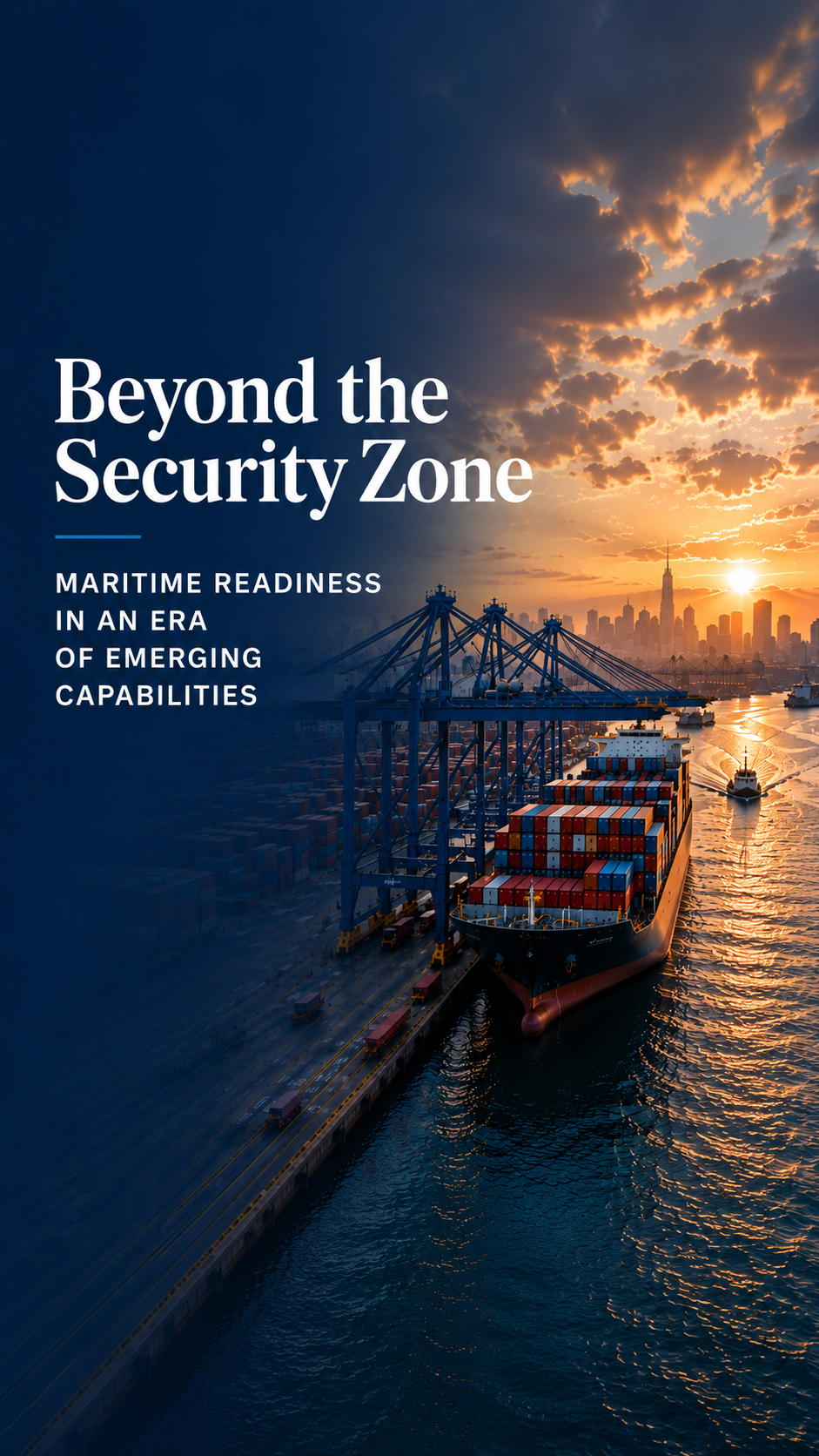
The MTS occupies a unique position within the national security and economic landscape. Unlike many sectors that can reduce operations or limit access during periods of heightened security, maritime commerce continues moving. Container ships continue arriving, petroleum products continue flowing through terminals and pipelines, ferry systems continue transporting passengers, cruise ships continue embarking travelers, search and rescue responsibilities remain unchanged, and law enforcement missions continue. The operational environment does not pause simply because a major event is taking place nearby.
Beyond the Security Zone
This reality is particularly relevant when discussing security zone management. Security zones remain an important tool for protecting critical infrastructure, managing risk, and providing operational space during periods of elevated security concern. However, establishing a security zone is often the easiest part of the mission. The greater challenge involves balancing security requirements with the continued movement of commerce, public access, emergency response obligations, and the countless activities that occur across the maritime domain every day. In many respects, the challenge is not establishing the zone…it is sustaining readiness everywhere else while it exists.
That challenge becomes even more significant when considering that many FIFA host cities and America 250 celebration locations are also home to major ports, waterfront infrastructure, cruise terminals, military facilities, and critical transportation networks. Increased security requirements in these areas create competing demands for personnel, equipment, and operational attention, ultimately making readiness, resource allocation, and port security just as important as the event security measures themselves.
Technology, Risk, and Resilience
Emerging technologies are increasingly shaping how organizations respond to those challenges as well. Over the past decade, ports and maritime stakeholders have invested heavily in advanced surveillance systems, artificial intelligence, integrated sensor networks, autonomous technologies, and enhanced maritime domain awareness (MDA) capabilities. Collectively, these tools provide greater visibility across large operating areas and help decision-makers better understand what is occurring throughout increasingly complex operating environments.
Unmanned aircraft systems, autonomous surface vessels, remote sensing technologies, and AI-enabled analytics all offer opportunities to improve awareness and extend operational reach. For organizations facing increasing demand signals and finite resources, these capabilities have the potential to become important force multipliers.
At the same time, it’s important to recognize that new technology creates new dependencies. Port operations rely on interconnected systems, digital infrastructure, and sophisticated operational technologies that must remain secure and resilient. As organizations become increasingly dependent upon these systems, resilience must also account for cyber threats, GPS disruption, electronic interference, and the possibility that critical technologies become degraded or unavailable.
Force Multiplication, Not Force Replacement
Recent events have demonstrated the importance of understanding that relationship. The Francis Scott Key Bridge collapse in Baltimore served as a reminder that maritime incidents rarely remain confined to a single operational area. What began as a vessel casualty quickly affected transportation networks, port operations, supply chains, critical infrastructure, and regional economic activity. The response required coordination among stakeholders from multiple disciplines while routine operations continued throughout the region.
The lesson for maritime security professionals is not that technology failed or that traditional methods were insufficient. Rather, it is that resilience remains just as important as capability. Technology can enhance performance, improve awareness, and support decision-making, but it does not eliminate the need for experienced professionals capable of adapting to changing conditions and making sound operational decisions.
This principle becomes particularly important as agencies continue evaluating how emerging technologies can support maritime operations. The conversation should not focus solely on defending against new threats. Equal consideration must be given to how these capabilities can responsibly enhance operational effectiveness. However, force multiplication should never be confused with force replacement. History consistently demonstrates that successful public safety operations depend upon trained personnel operating within established systems.

The Human Element
The same principle applies to interoperability. For years, public safety and homeland security organizations have emphasized interoperable communications, shared situational awareness, and collaborative planning. Those investments have produced measurable improvements across the maritime security community. Yet interoperability is ultimately a human endeavor built through common training, shared doctrine, recurring exercises, and trusted relationships developed over time.
Major events often reveal the difference between organizations that can communicate and organizations that can truly operate together. The agencies that perform effectively during periods of sustained demand are rarely building relationships for the first time. They are leveraging partnerships, standards, and operational frameworks that were established long before the incident occurred. Effective coordination also requires visibility into available capabilities, qualifications, and readiness levels across the operating environment. Agencies cannot effectively leverage resources they cannot identify or coordinate capabilities they cannot see.
Looking Ahead…
As preparations and operations for FIFA 2026 and America 250 continue, there is a tendency to focus attention on the security requirements associated with the events themselves. While those requirements are important, they should not overshadow a broader opportunity to evaluate readiness across the maritime enterprise. These events provide a valuable stress test for the systems, partnerships, technologies, and operational concepts that will define maritime security for years to come.
The most important lessons from 2026 may have little to do with stadiums, ceremonies, or security zones. Instead, they are likely to reveal how effectively agencies can balance increasing demand, emerging technologies, and the operational realities of protecting the maritime transportation system. The MTS has always depended upon infrastructure, technology, people, partnerships, and operational discipline. While technology will continue to evolve, the human element remains the common denominator.
The real test facing the maritime security community is not whether it can secure a venue or deploy the latest technology. It is whether it can continue executing the missions the public depends upon while adapting to emerging threats and evolving operational demands.
In an era defined by emerging capabilities, readiness remains the ultimate measure of success.
Leave a Reply